If you’ve looked into upgrading your garage floor, you’ve probably come across two premium options that sound almost identical on paper: quartz and flake. Both are part of high-end coating systems, like the Penntek floors installed by FloorTech, yet they create completely different looks once finished. One is sleek and rugged; the other, bold and decorative.
Quartz floors have a fine, uniform texture that shines in commercial or outdoor spaces, while flake floors offer a decorative, terrazzo-like look that homeowners love for garages. Quartz feels rougher and more industrial. Flake is smoother, more customizable, and more comfortable underfoot – making it the clear favorite for most garage floors.
What Exactly Is a Quartz Floor Coating?
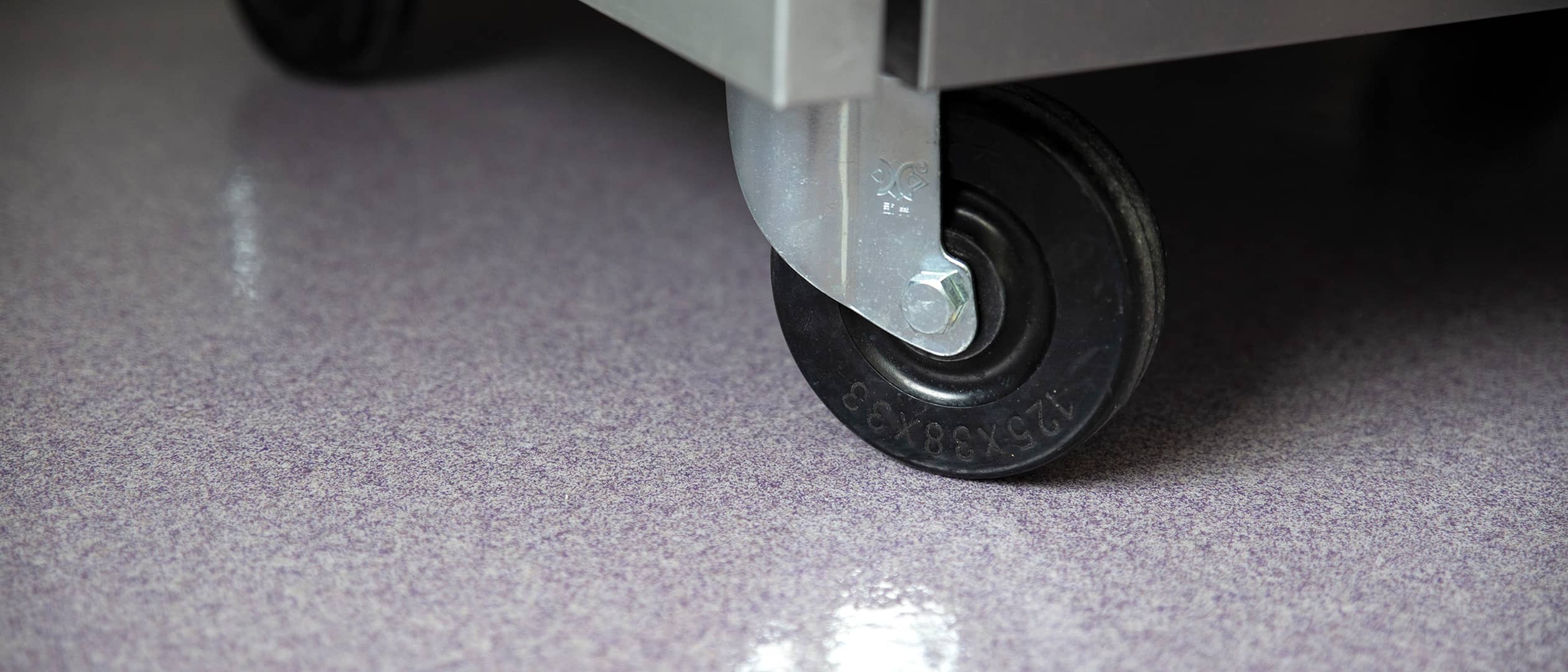
Quartz coatings use finely ground quartz crystals mixed into the coating system to create a uniform, textured finish with a clean, matte look. These crystals are the same mineral found in natural stone and sand, giving the surface a subtle sparkle and grip.
The difference from flake systems is not in strength but in feel and appearance. Both use the same high-performance base and topcoat for durability and UV protection. Quartz simply creates a rougher, more slip-resistant texture that makes it a great choice for wet or high-traffic areas such as pool decks, workshops, or commercial kitchens where traction is important.
Color options are more understated and consistent than flake systems, with blends like Tundra, Firehouse, and Biscuit giving the floor a smooth, professional look that feels more industrial than decorative.

What Is a Chip or Flake Floor Coating?
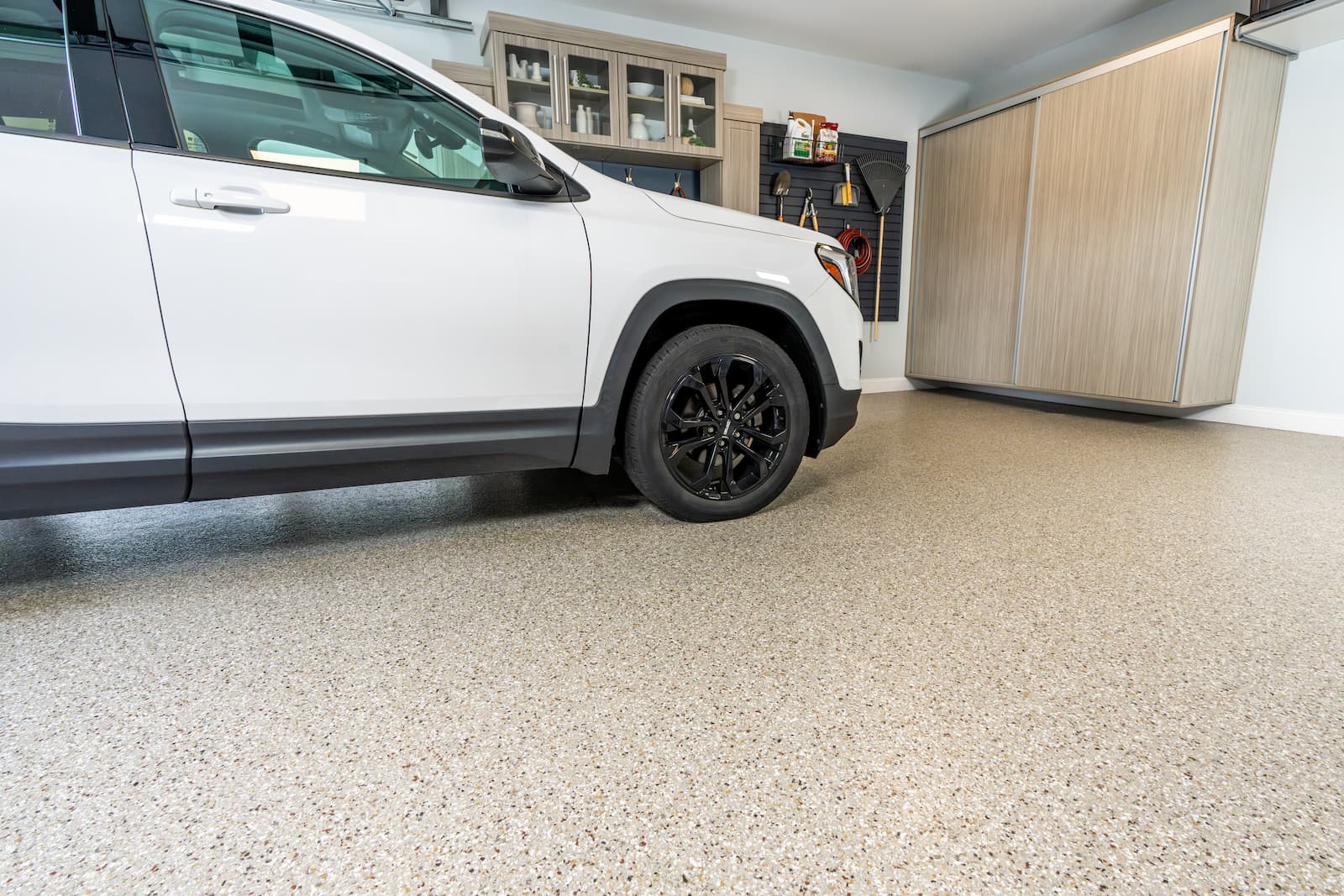
Flake (also called “chip”) systems start with the same industrial-strength foundation – a polyurea basecoat and a polyaspartic clear topcoat. But instead of quartz sand, colored vinyl flakes are broadcast across the surface. This creates that recognizable, multi-dimensional “stone” or “terrazzo” look that’s smooth underfoot yet still has a subtly textured feel – a light, bumpy surface that adds traction without feeling rough.
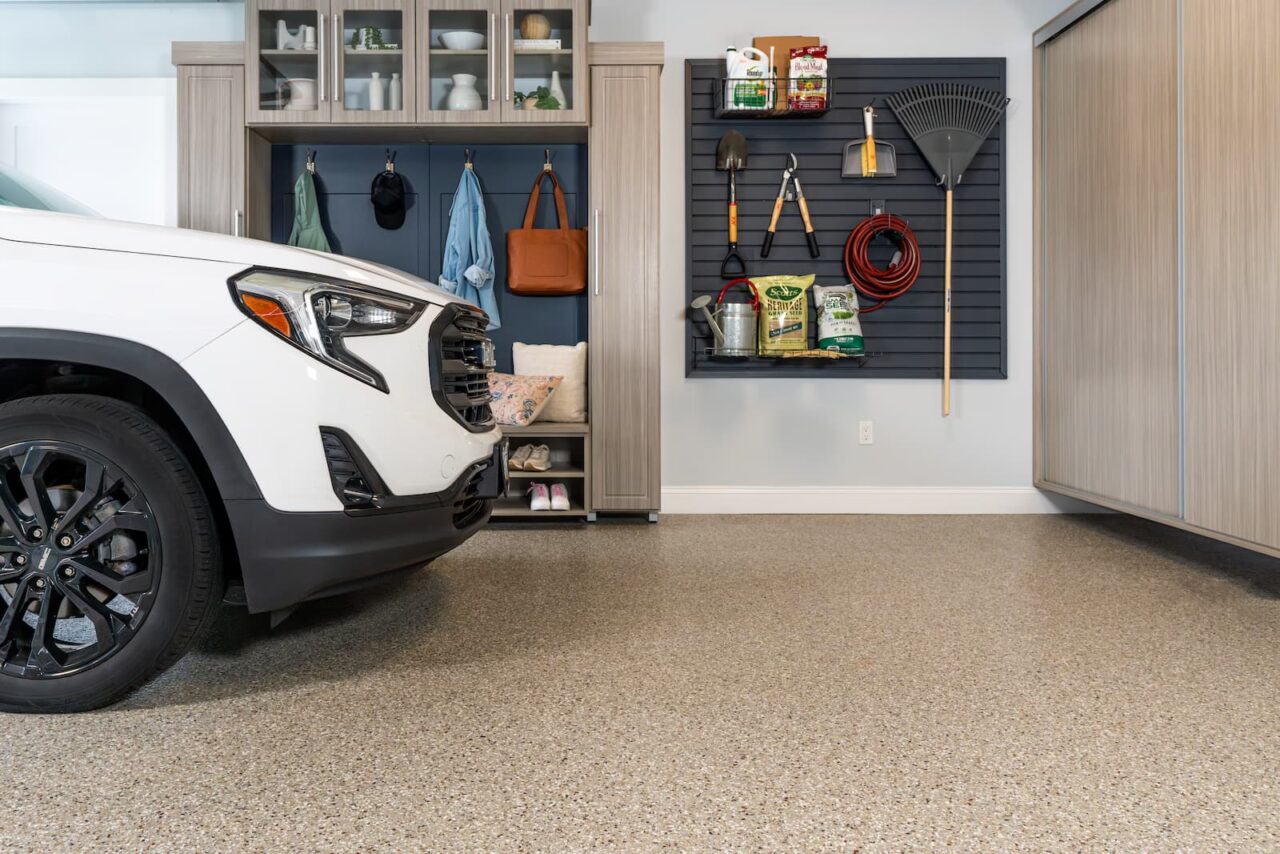
The biggest draw of flake floors? Customization. You can choose blends that complement your garage cabinets, vehicles, or even the exterior of your home. From sleek grays and silvers to earth tones and bold designer mixes, flake floors let you personalize your space like no other system. It’s one reason why flake has become the gold standard for residential garage coatings.
Which One Looks Better in a Garage?
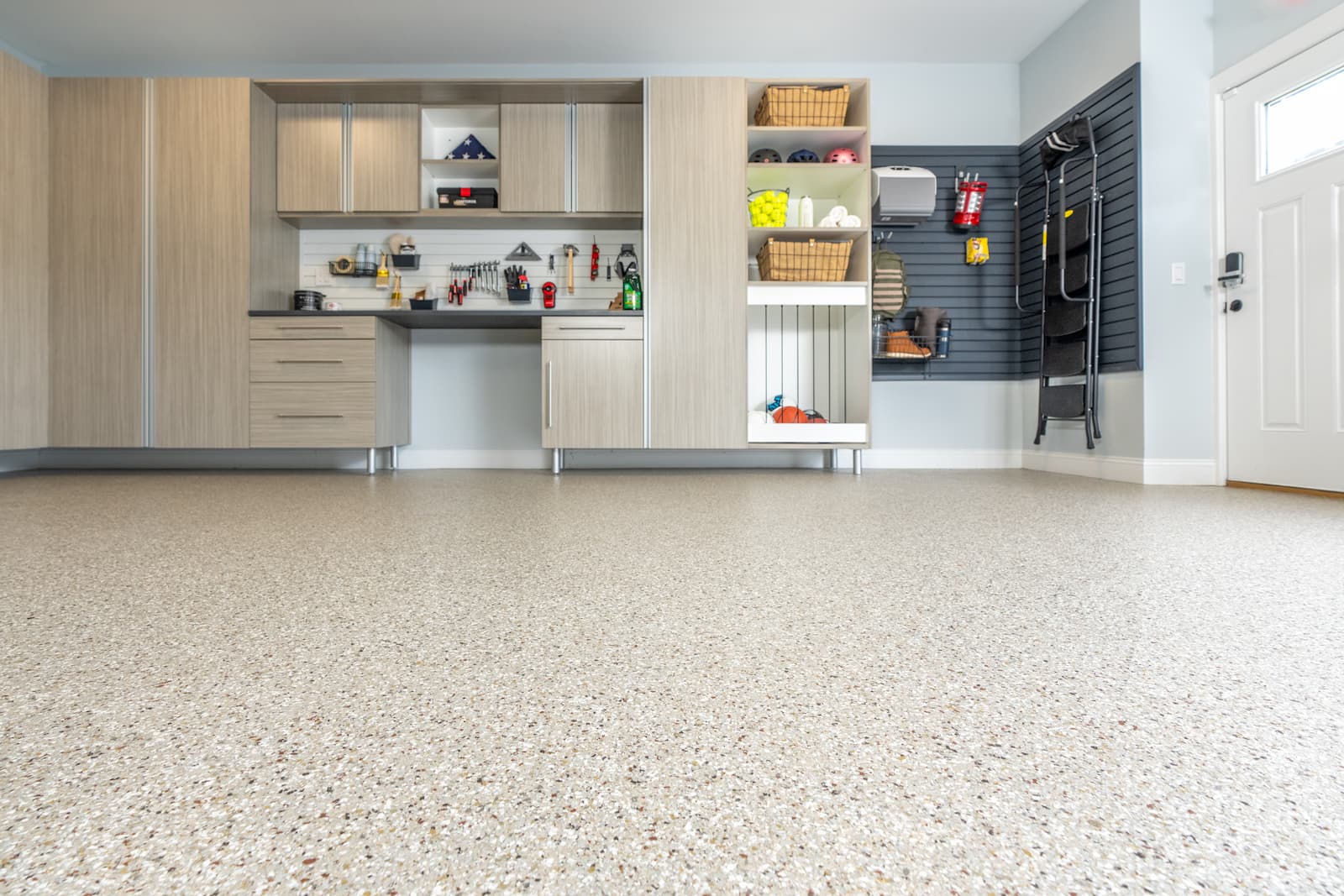
If your goal is to make your garage look finished, stylish, and easy to live with – flake wins, hands down. It has the same protective backbone as quartz, but the surface looks more natural and inviting. The flakes create depth and variation, disguising dust and dirt while giving the floor a clean, decorative look that feels like an extension of your home rather than an industrial workspace.
Quartz, while attractive in a minimalist way, has more of a utility aesthetic – crisp, uniform, and practical. It looks sharp in the right setting, but in a garage where you park cars and move around barefoot or on bikes, it can feel a little too rough and sterile.
How Do They Compare for Safety and Feel?
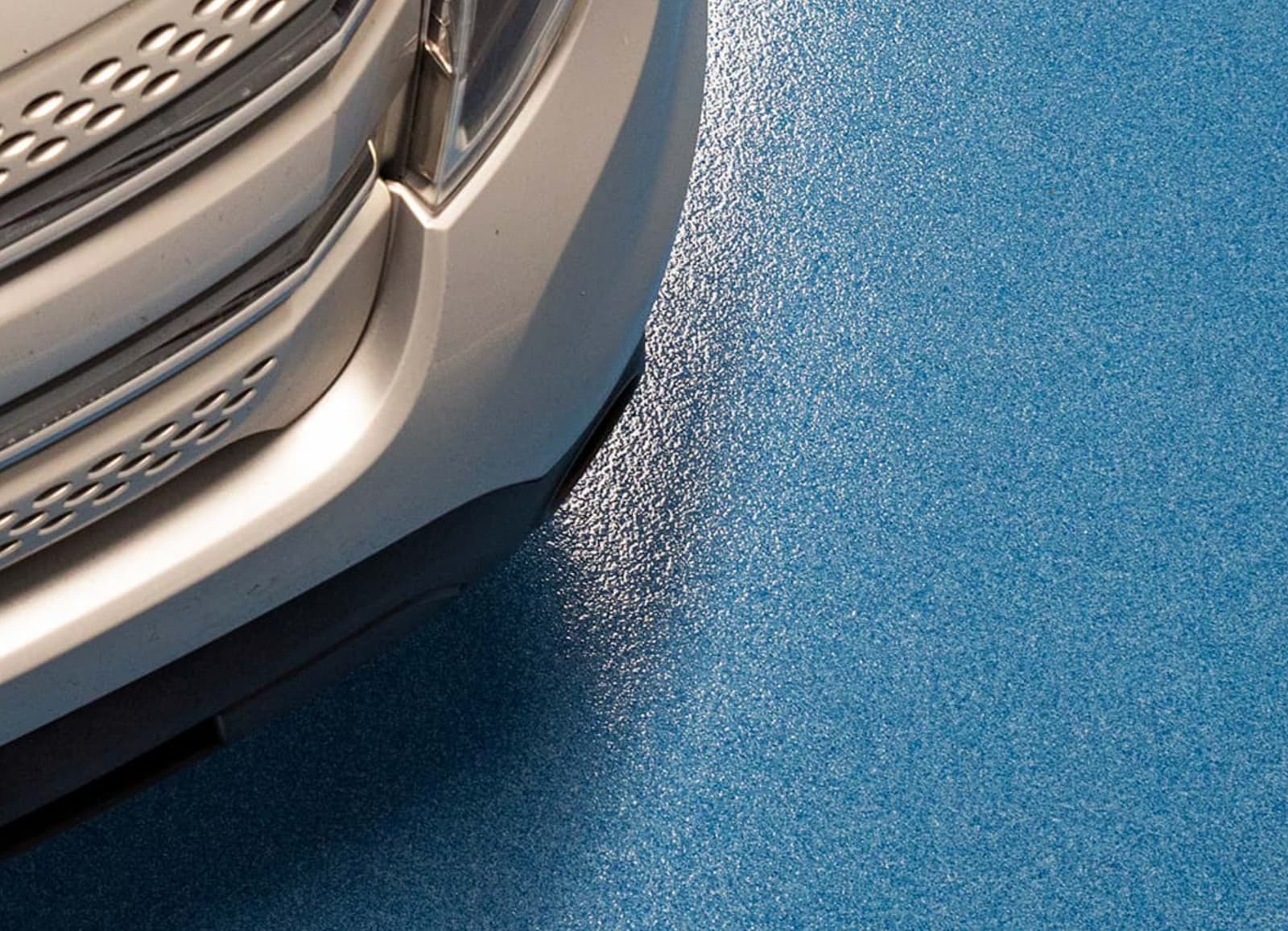
Both finishes are slip-resistant, but quartz offers the most traction. Its gritty surface provides excellent grip in wet or greasy conditions, which is why it’s often used around pools, restrooms, and commercial areas.
Flake, by contrast, strikes a more comfortable balance. It’s slip-resistant but smoother to the touch, so it’s easier on bare feet and doesn’t feel abrasive. Homeowners often prefer this softer feel in garages where kids, pets, or guests walk frequently.
Quartz’s coarse texture can also trap dirt a bit more easily. It’s not a problem, but it does mean cleaning might take an extra sweep or rinse. Flake’s smoother finish makes cleaning as simple as a quick hose-down or mop.
Are They Equally Durable?
Yes, both systems are incredibly durable when installed by professionals using the right prep methods and materials. Each one starts with industrial diamond grinding to prep the surface, followed by a pure polyurea basecoat for deep adhesion and a UV-stable polyaspartic topcoat to seal and protect the floor.
Quartz coatings tend to be slightly denser, giving them an edge in high-impact or high-moisture settings. Flake systems, however, are more than tough enough for garages. They resist hot tire pickup, chemicals, salt, and abrasion without peeling or fading.
And because both are built using Penntek-grade materials, they’re backed by a manufacturer-supported lifetime warranty – not just an installer’s promise. That means even if the contractor disappears, your floor’s warranty doesn’t.
What About Cost?
Quartz coatings are generally more expensive because they use more material and take longer to install. Multiple layers of quartz must be broadcast and sealed, which adds labor time and increases product use. The result is a heavier, more textured finish that’s ideal for safety but less common in residential settings.
Flake systems are more budget-friendly and widely used for home garages. A standard two-car garage, typically 400 to 600 square feet, runs around $3,200 to $4,800 depending on surface prep, crack repair, and any extras like stairs or verticals. Quartz coatings usually cost more, with pricing that varies based on the space and desired texture.
For most homeowners, flake floors offer the best overall value. They provide a custom look, smooth feel, and long-lasting protection at a lower price point, making them the preferred choice for residential garages. And if a homeowner prefers a slightly rougher, more grippy surface like quartz, FloorTech can achieve that same texture by adding a fine traction additive to the topcoat instead of switching to a full quartz system.
When Does Quartz Make More Sense?
Quartz isn’t out of the race, it’s just built for a different kind of performance. If you’re coating an area that needs heavy traction, constant cleaning, or chemical resistance, quartz might be the smarter choice.
Perfect examples: pool decks, commercial kitchens, workshops, or any area that stays wet or oily. It’s nearly indestructible and provides the kind of grit you want in slippery or demanding environments.
But if you’re talking about your personal garage, where you value appearance as much as protection, flake still reigns supreme.
Why Installation Quality Is the Real Game-Changer
Even the best coating system can fail if the prep isn’t right. That’s why every FloorTech project begins with industrial diamond grinding (no acid etching), followed by crack and pit repair, and moisture testing to ensure a proper bond.
If moisture levels are above roughly 5.5, an epoxy-based Moisture Vapor Barrier (MVB) is applied before coating. This extra step protects against bubbling, peeling, or delamination – common issues when cheaper installers skip testing.
This level of prep and precision is what allows FloorTech to stand behind its work with a manufacturer-backed lifetime warranty – a real one, not a “taillights warranty” that disappears when the installer drives away.
What’s the Most Popular Garage Floor Finish in Virginia?
In Virginia, most homeowners choose flake systems for their garages – and for good reason. Flake floors offer the ideal mix of looks, comfort, and performance. They brighten up the space, match almost any home style, and still deliver the same long-term durability as more industrial coatings.
Quartz coatings have their place too, especially in areas that need extra traction or stay wet, like pool decks or workshops. They’re all about texture and toughness. Flake, on the other hand, is about transforming your garage into a clean, modern, and livable part of your home.
When installed by FloorTech’s certified Penntek team, both systems deliver professional-grade strength backed by a lifetime manufacturer warranty – but for most Virginia homeowners, flake is the finish that looks better, feels better, and fits everyday life.
Explore more of our local projects or request your free quote today.